Classical Optimization to Agentic AI
AI in Supply Chain: The adago Approach
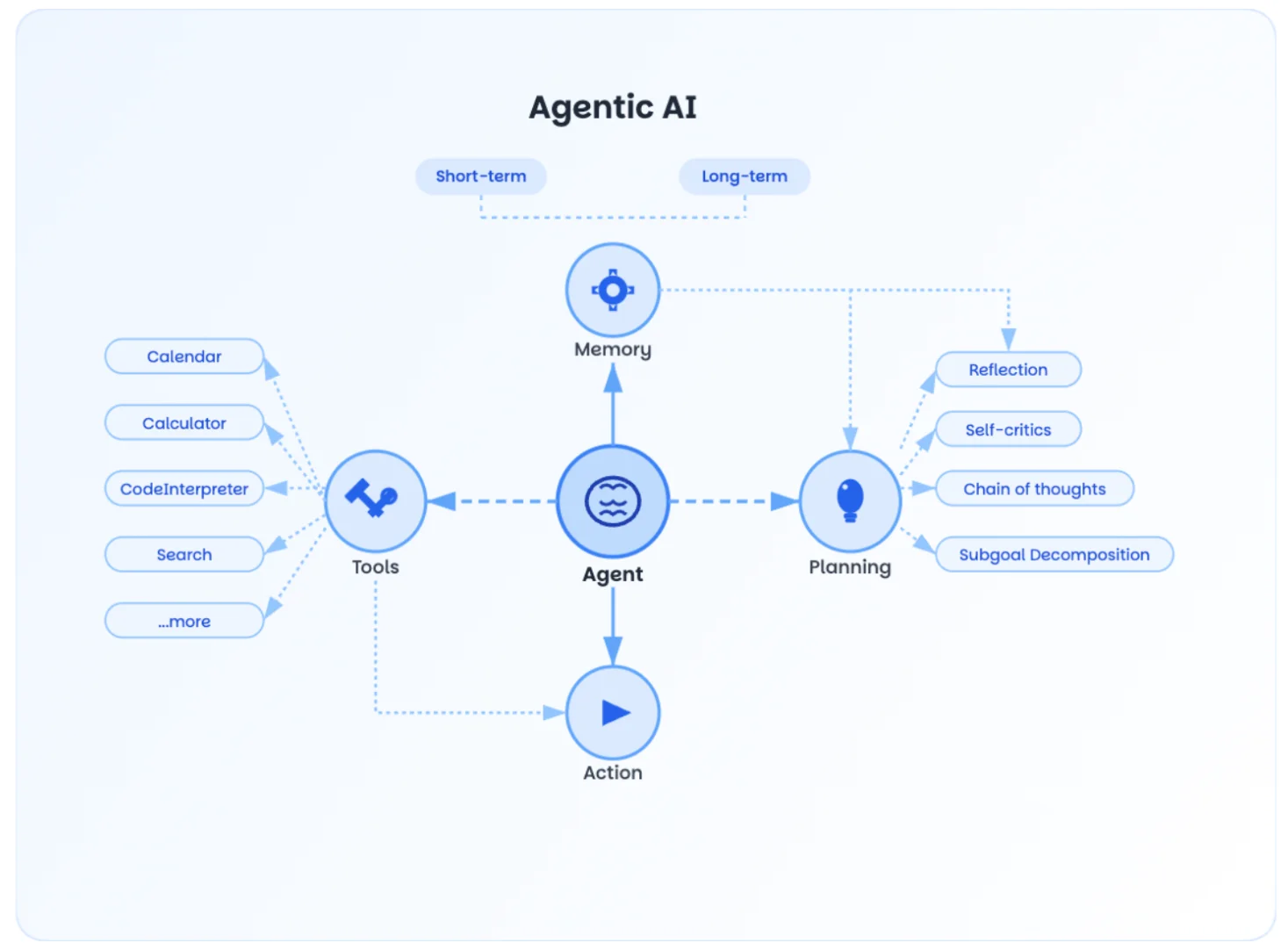
At adago, we build agentic AI that reasons, plans, and adapts like a human expert. By combining the rigor of classical optimization with the intuition of modern large language models, our systems continuously learn and self-improve. The result: supply chains that anticipate change, make decisions autonomously, and drive measurable performance across every level of operation.
Transparency, Accessibility, and Continuous Learning
The Fundamental AI Challenge in Supply Chains
Supply chains are living, unpredictable ecosystems characterized by:

Extreme variability
Demand spikes, geopolitical shocks, and machine failures.

Interconnected networks
Thousands of nodes spanning suppliers, CDMOs, and logistics partners.

Millisecond-level decisions
Real-time adjustments for production schedules, inventory, and transport.

Competing objectives
Cost efficiency vs. sustainability, service levels vs. risk mitigation.
Three Pillars of Intelligent Supply Chain Management
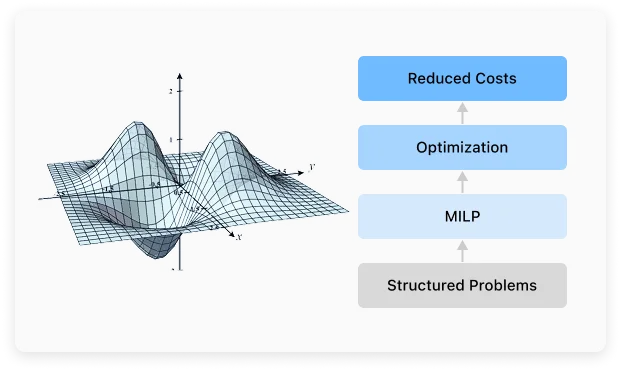
Deterministic Precision: Classical Optimization
- What it solves: Structured problems with clear constraints (e.g., production scheduling, EOQ).
- Technical edge: Mixed-integer linear programming (MILP) for fleet routing, capacity planning.
- Industry impact: Reduces transport costs by 12-18% while respecting warehouse limits.
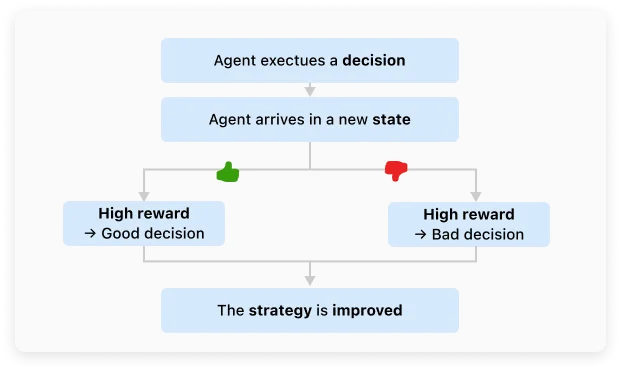
Adaptive Intelligence: Reinforcement Learning (RL)
- What it solves: Dynamic, chaotic environments (e.g., demand volatility, supplier bankruptcies).
- Technical edge: Trains AI agents in a digital twin to learn policies through 10,000+ simulated scenarios.
- Industry impact: Cuts safety stock costs by 25% while maintaining 99% service levels.
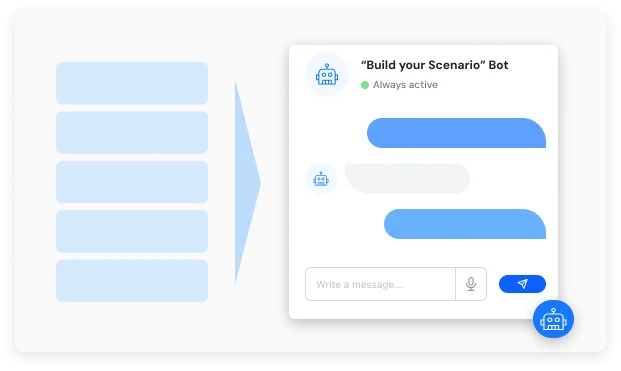
Conversational Interface: Large Language Models (LLMs)
- What it solves: Democratizing access to AI insights.
- Technical edge: Natural language queries (e.g., “Find Q3 bottlenecks”) auto-translate into simulation parameters.
- Industry impact: Reduces scenario setup time from days to minutes for non-technical teams.
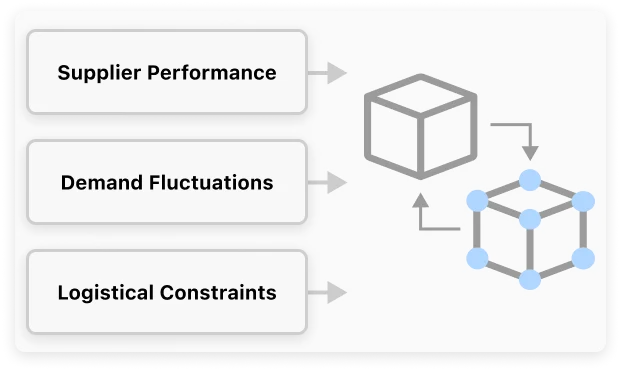
Key Components of AI-driven Optimization

Moritz Kern
CEO
Ready to Transform Your Supply Chain?
Whether you're ready to request a demo or simply want to explore how our solution can benefit your business, we'd love to connect!
Get in Touch
Fill out the form below and we'll get back to you within 24 hours.